North America holds two species of wild sheep. Bighorn sheep live in the mountains and deserts of the West, and thinhorn sheep live in the far north. Hunters divide them into four sheep, and taking all four is the famous Grand Slam.
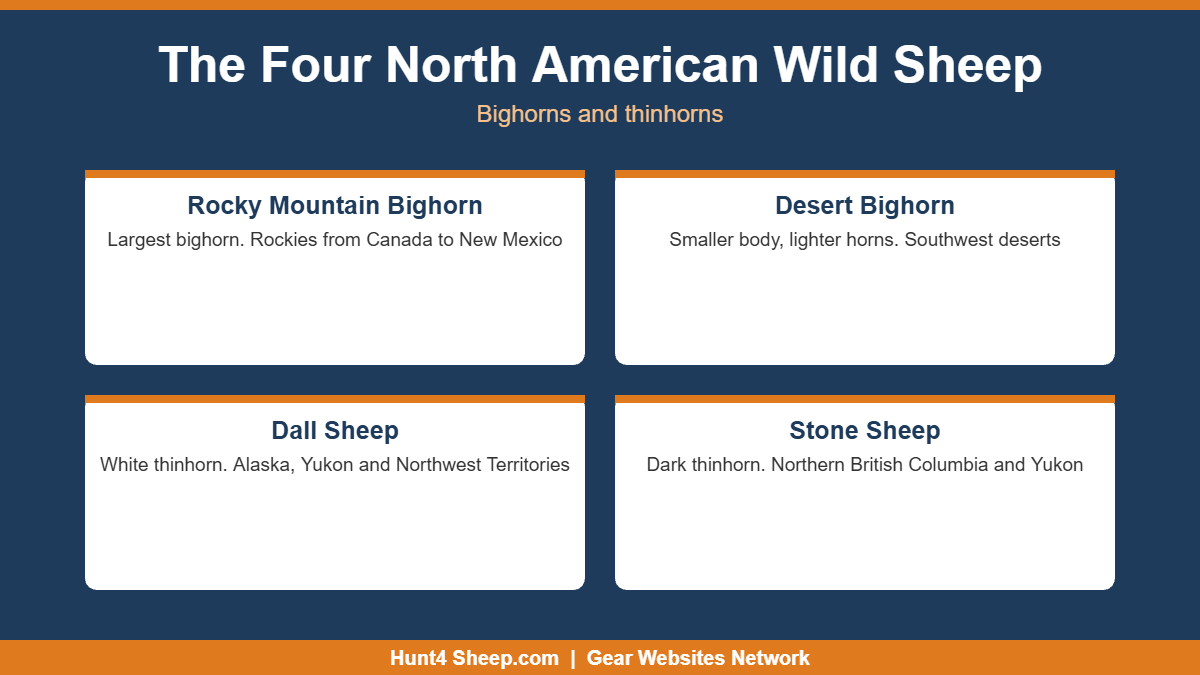
Rocky Mountain bighorn
The Rocky Mountain bighorn is the largest wild sheep on the continent. Mature rams can top 250 pounds and carry horns that wrap into a heavy, tight curl. They range from Alberta and British Columbia south through Montana, Wyoming, Idaho and Colorado to New Mexico. Colorado named the Rocky Mountain bighorn its state animal.
Desert bighorn
Desert bighorns are smaller and lighter, built for heat and scarce water. They live in the rough ranges of Arizona, Nevada, California, Utah, New Mexico, Texas and northern Mexico. Their breeding season comes in the hottest months in many herds, so lambs arrive when the desert greens up. Nevada named the desert bighorn its state animal.
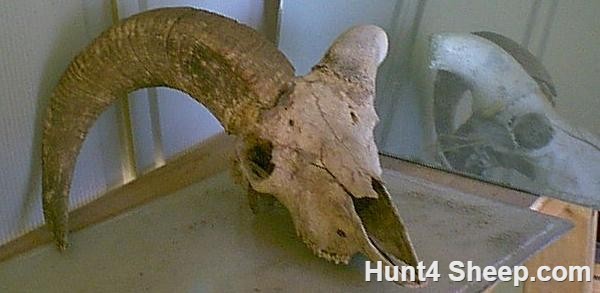
Dall sheep
Dall sheep are the white thinhorns of Alaska, the Yukon and the Northwest Territories. Their horns are thinner than a bighorn’s and often flare away from the face as they curl. Dall country is steep, remote and often reached only by bush plane.
Stone sheep
Stone sheep are the dark thinhorns of northern British Columbia and southern Yukon. Coat color runs from slate gray to nearly black, with a white rump and muzzle. Where Dall and Stone ranges meet, intermediate sheep with mixed coloring are often called Fannin sheep.
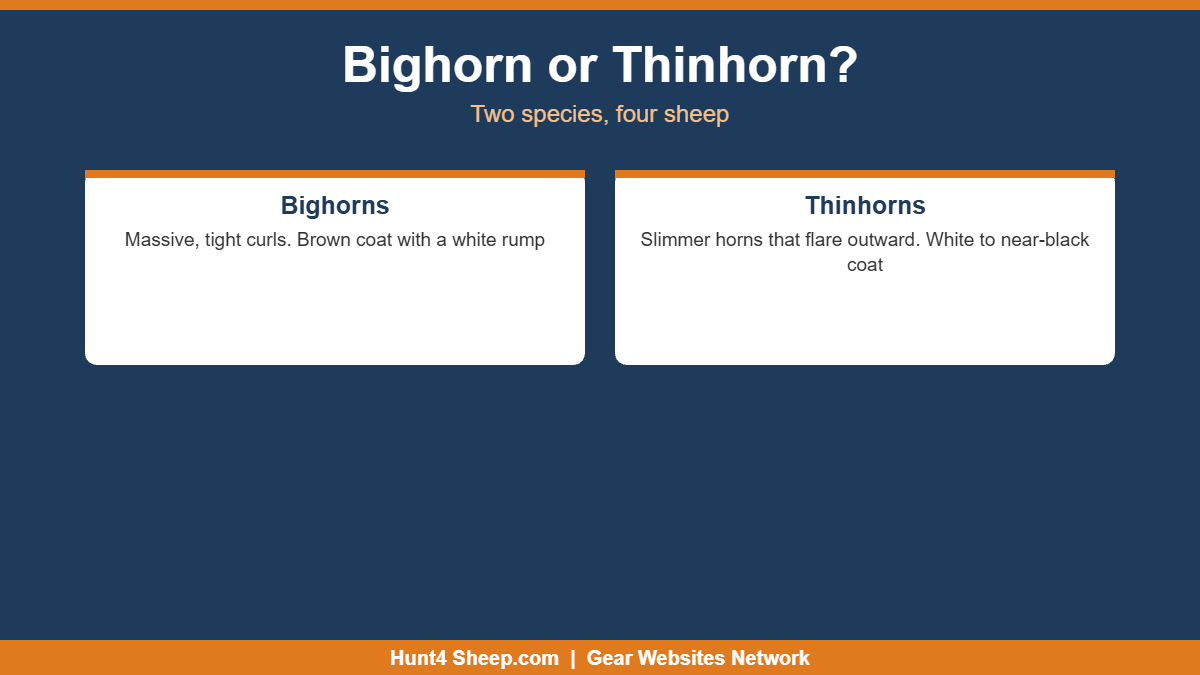
How to tell them apart
- Bighorns have massive horns that curl tight to the face; thinhorns have slimmer horns that flare outward
- Bighorns are brown with a white rump; Dall sheep are white and Stone sheep are dark
- Rocky Mountain bighorns are the heaviest; desert bighorns are the lightest of the bighorns
- Range alone usually settles it, since the four sheep rarely overlap
Sheep and mountain goats
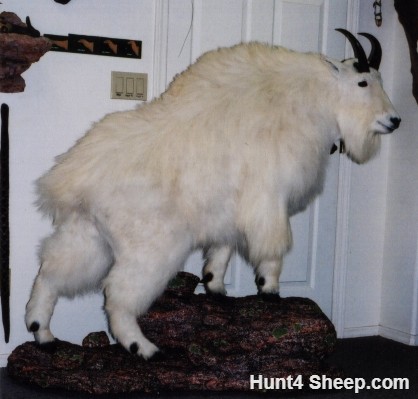
Mountain goats often share the high country with bighorns, but they are not sheep. Goats have short, black, dagger-like horns that are never shed, long white coats and a beard. Sheep horns curl, and only rams grow the heavy curl hunters chase.
Each species page in the Hunting Websites network covers seasons, states and tactics. For the draw and points side of sheep hunting, read Tags and Draws.