A sheep tag is the hardest tag in North American hunting to get. Most states issue only a handful of bighorn permits each year, and thousands of hunters apply for them. Understanding how the systems work is the first step toward ever holding one.
Draws
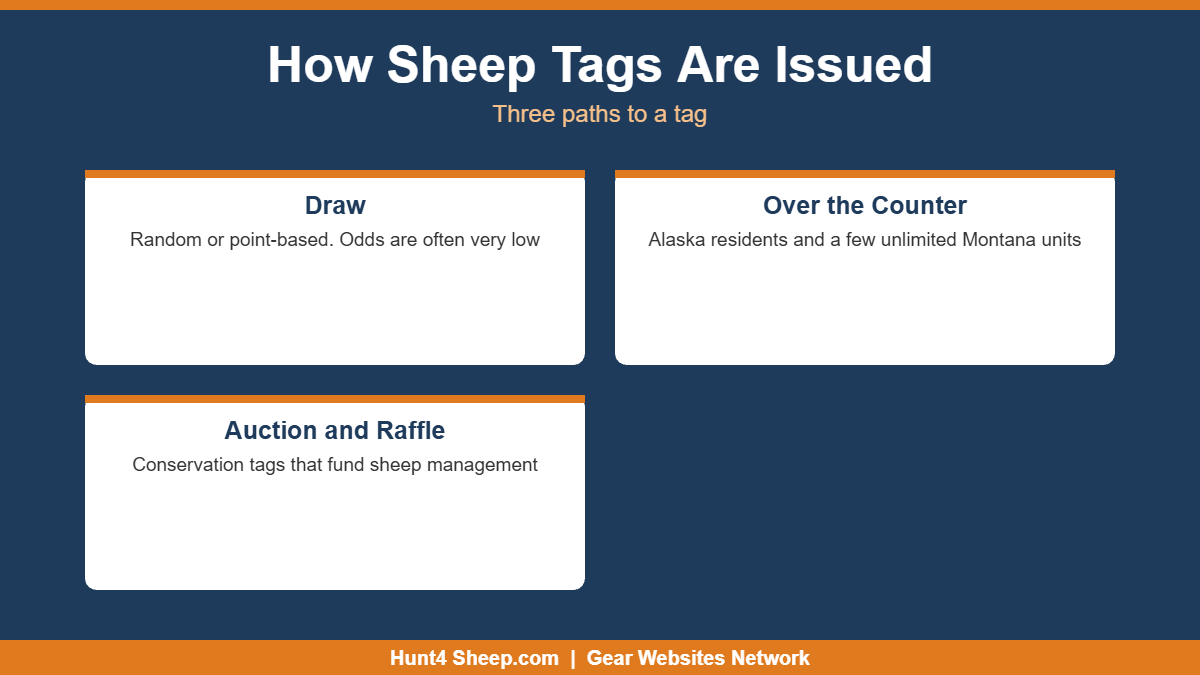
Most bighorn tags are issued through a state draw. Hunters apply during an application window, often in the winter or spring before the season, and pay a small application fee. Odds in popular units can be well under one percent, especially for nonresidents, who usually compete for a small share of the permits.
Preference and bonus points
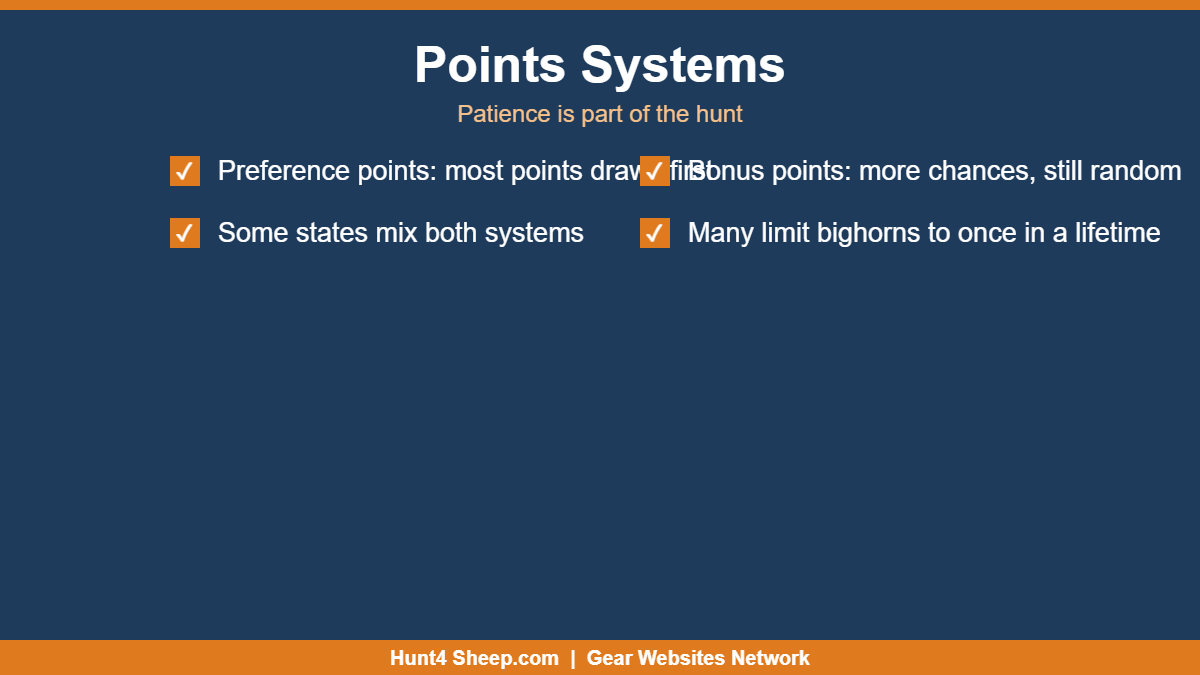
Many states award a point each year a hunter applies and does not draw. Preference point systems give tags to the applicants with the most points first. Bonus point systems give extra chances in a random draw, so a new applicant can still get lucky. Some states use a mix, setting aside part of the tags for top point holders and drawing the rest at random.
Once in a lifetime
Many states limit a hunter to one bighorn in a lifetime, or one of each subspecies. Others make a successful hunter wait years before applying again. Read the rules before applying, because a tag drawn in one state can affect eligibility there for good.
Over the counter
A few hunts do not require a draw. Alaska residents can hunt Dall sheep in many areas with a general harvest ticket. Montana has a handful of unlimited bighorn districts where anyone can buy a license, but the harvest quota is small and the season closes as soon as it is met. These hunts are hard and success rates are low.
Auction and raffle tags
Most sheep states set aside one or two conservation tags each year. They are sold at auction or raffled by wild sheep organizations, and the money goes back to the state for sheep management, transplants and research. Auction tags can sell for very large sums, while raffle tickets give anyone a chance for a modest price.
Nonresidents and guides
Nonresidents hunting Dall sheep in Alaska must hire a licensed guide or hunt with a close resident relative. Canadian provinces generally require nonresidents to hunt with a licensed outfitter. In the Lower 48, guides are optional for most bighorn hunts, though many hunters hire one for a once-in-a-lifetime tag.
Next, see the Best States for Sheep Hunting.