Wild sheep have survived market hunting and lost habitat, but one threat still knocks herds down across the West: pneumonia.
How it spreads
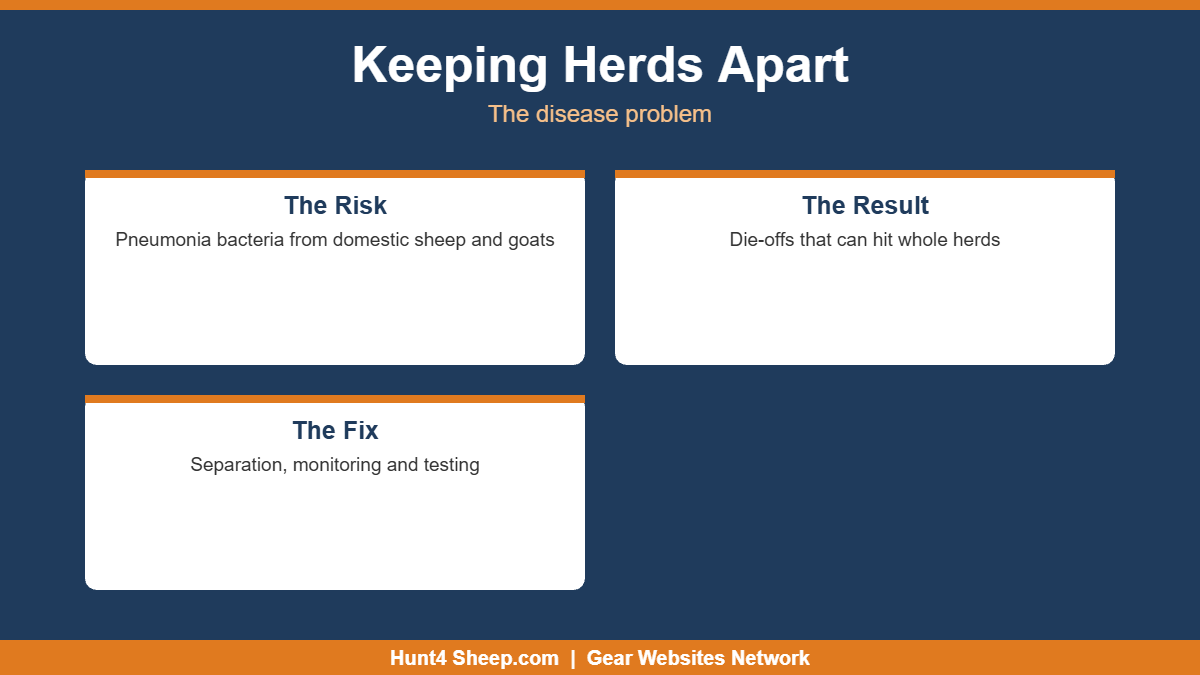
Domestic sheep and goats can carry bacteria that cause little harm to them but deadly pneumonia in bighorns. A single contact between a wandering bighorn and a domestic flock can bring the disease back to a wild herd.
What it does
Outbreaks can kill a large share of a herd in a single season. Survivors may carry the bacteria for years, and lambs born into infected herds often die young, holding the population down long after the first die-off.
What is being done
- Wildlife agencies work with ranchers and land managers to keep domestic and wild sheep apart
- Researchers test herds to track the bacteria
- Some agencies remove sick animals to protect healthy herds
- Hunters are asked to keep pack goats out of bighorn range
Separation is the most effective protection known today. Sheep hunters, ranchers and agencies working together decide whether bighorns keep their hard-won comeback.